

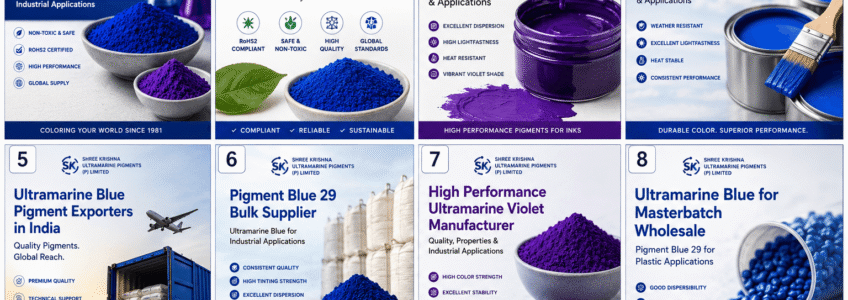
The search for a reliable Non-toxic Ultramarine Blue supplier increasingly reflects the broader shift toward responsible raw-material selection.
Industrial buyers today are not concerned only with obtaining the required blue shade. Procurement, quality-control and formulation teams may also evaluate chemical composition, heavy-metal limits, regulatory documentation, product consistency and suitability for the intended end use.
When evaluating Ultramarine Blue for applications with specific safety requirements, buyers should consider the following.
Product Composition
Request technical information relevant to the chemical composition and characteristics of the selected pigment grade.
Safety Documentation
A professional supplier should be able to provide appropriate product documentation, such as a Safety Data Sheet (SDS), where applicable.
Application Suitability
A pigment described as suitable for one application should not automatically be assumed to meet the requirements of another.
Paints, toys, plastics, packaging, electronics, cosmetics and other products may be governed by different standards.
Heavy-Metal and Restricted-Substance Requirements
Where specific limits apply, buyers should request current test data or compliance documentation for the exact pigment grade being considered.
Batch Consistency
For industrial production, repeatability can be just as important as initial pigment quality. Manufacturers need predictable shade and performance across subsequent orders.
Therefore, choosing a supplier should involve both technical and commercial evaluation rather than relying on a “non-toxic” label alone.